


South-East Vastu: Understanding the Agni Direction
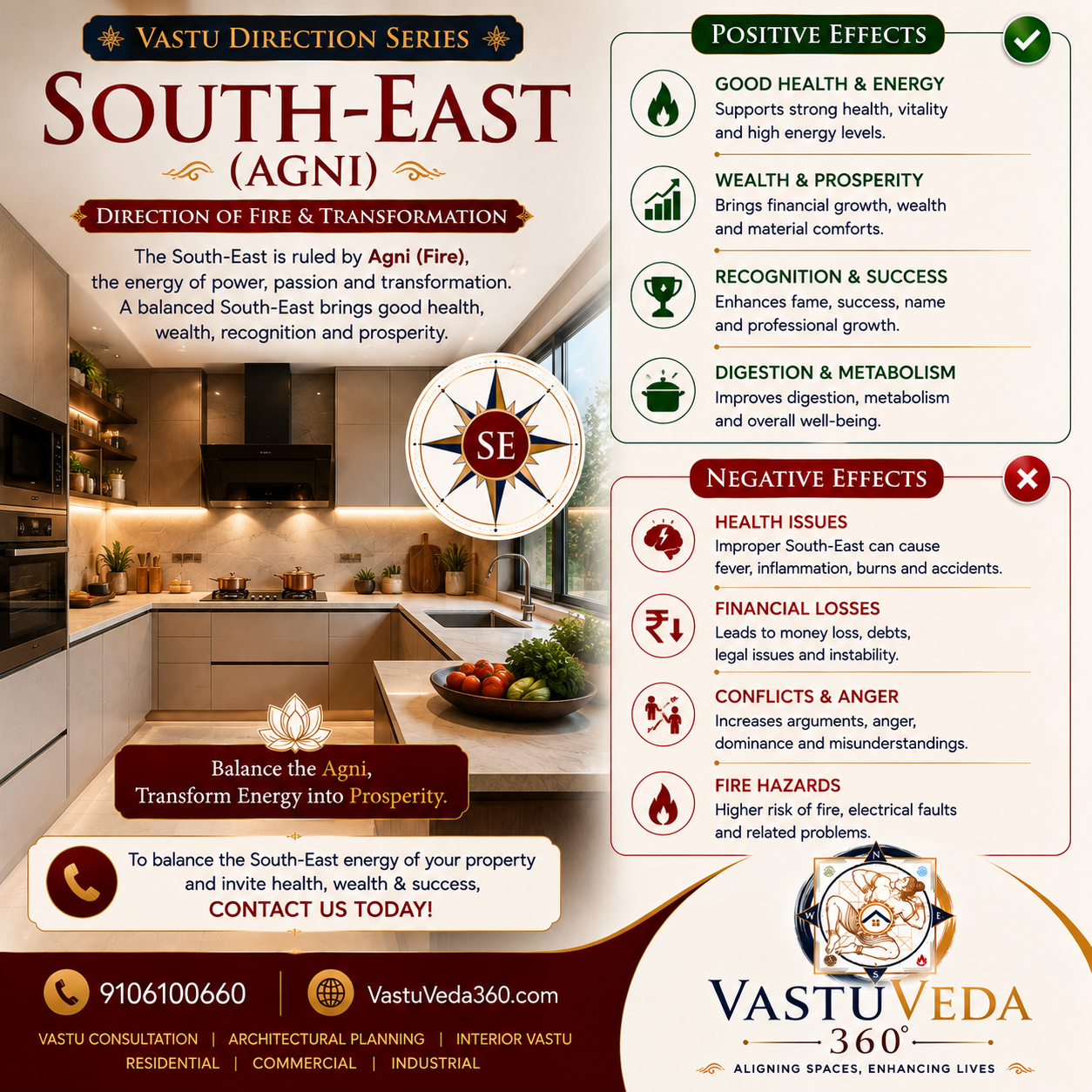
In Vastu Shastra, the South-East direction is known as the Agni Kon or Agni corner and is associated with the element of fire. The South-East represents energy, transformation, activity, passion and power.
A properly planned South-East can support a space’s intended function and contribute to a sense of balance, productivity and prosperity. On the other hand, inappropriate planning of this zone may create functional and energetic imbalances.
For homes, offices, commercial properties and industrial spaces, understanding the role of the South-East direction can be an important part of overall Vastu planning.
What Does South-East Represent in Vastu?
The South-East is traditionally associated with Agni, the fire element.
It is connected with:
- Fire and heat
- Energy and vitality
- Transformation
- Passion and activity
- Wealth and material growth
- Recognition and professional success
- Digestion and metabolism
Because of its association with fire, the South-East is particularly important when planning areas involving heat, cooking, electrical equipment or other fire-related activities.
Positive Effects of a Balanced South-East
According to the concepts presented in the Vastu Direction Series, a balanced South-East can be associated with several positive outcomes.
1. Good Health & Energy
A well-balanced South-East is traditionally associated with vitality, energy and physical well-being.
2. Wealth & Prosperity
The South-East can play an important role in supporting financial growth, material comforts and prosperity when appropriately planned.
3. Recognition & Success
A balanced Agni zone is associated with professional growth, recognition, achievement and success.
4. Digestion & Metabolism
Because of its connection with the fire element, South-East is traditionally associated with digestive fire, metabolism and overall energy.
What Can Happen When South-East Is Imbalanced?
An unsuitable South-East configuration may create concerns according to Vastu principles. The image highlights four major areas.
Health Issues
An improperly planned South-East is traditionally associated with concerns related to excessive heat, inflammation, burns and accidents.
Financial Losses
Vastu traditions associate certain South-East imbalances with financial instability, debts and unexpected losses.
Conflicts & Anger
Excessive or disturbed fire energy may be associated with arguments, anger, dominance and misunderstandings.
Fire Hazards
Because South-East represents Agni, inappropriate placement of fire-related elements or electrical systems may create practical safety concerns. Fire safety should always be addressed through proper electrical, architectural and safety standards in addition to any Vastu considerations.
South-East Vastu for the Kitchen
The South-East is traditionally considered an important location for a kitchen because cooking involves the fire element.
When planning a kitchen, the complete layout should be evaluated rather than considering direction alone. Placement of the stove, sink, refrigerator, ventilation, electrical points, windows and movement space should work together with the overall architectural plan.
A Vastu consultant can assess these factors as part of a complete property analysis.
South-East Vastu for Homes
For residential properties, the South-East should be considered along with the other directions and the overall floor plan.
Important aspects may include:
- Kitchen placement
- Cooking area
- Electrical equipment
- Fire-related installations
- Bedroom and living-space relationships
- Doors and windows
- Shape and proportion of the South-East zone
- Overall energy distribution of the property
Rather than judging a property based on one direction alone, a complete Vastu assessment can provide a more practical understanding of the space.
South-East Vastu for Offices & Commercial Spaces
In offices and commercial properties, South-East can be evaluated in relation to electrical equipment, technology, activity zones and other functions associated with heat or energy.
A balanced layout can be planned while considering:
- Workstations
- Electrical rooms
- Equipment
- Pantry or kitchen
- Server and technical areas
- Movement patterns
- Entrance and circulation
- Overall directional zoning
The objective is to combine Vastu principles with functional architectural planning.
South-East Vastu for Industrial Properties
Industrial properties require a more detailed approach because they may involve machinery, electrical systems, furnaces, boilers, production equipment and other high-energy operations.
South-East Vastu analysis for industrial spaces can therefore consider:
- Fire-related operations
- Electrical installations
- Machinery placement
- Production areas
- Heating systems
- Worker circulation
- Safety requirements
- Overall site planning
Vastu planning should complement—not replace—engineering, fire safety and statutory requirements.
South-East Vastu Remedies
If the South-East has an existing Vastu concern, demolition or major reconstruction is not necessarily the first step.
A professional Vastu assessment can identify the nature and severity of the issue and determine whether practical non-demolition Vastu remedies or architectural modifications may be appropriate.
Possible solutions depend on the actual property, its layout, usage and directional measurements. Therefore, remedies should ideally be recommended after a property-specific analysis rather than applying the same remedy to every space.
Why Professional South-East Vastu Analysis Matters
The South-East is only one part of a property’s overall Vastu framework.
A professional assessment can evaluate:
- Exact direction and degree measurements
- Plot orientation
- Building layout
- Room placement
- Entrance location
- Kitchen and fire-element placement
- Electrical zones
- Positive and negative directional influences
- Practical Vastu remedies
- Architectural and interior planning requirements
At VastuVeda 360, Vastu principles are considered alongside architectural planning and interior Vastu to create a more comprehensive approach for residential, commercial and industrial properties.
South-East Vastu: Frequently Asked Questions
Is South-East good according to Vastu?
South-East is an important direction associated with Agni or the fire element. Its suitability depends on the property’s overall layout, usage and directional balance.
Is South-East good for a kitchen?
South-East is traditionally considered a suitable zone for a kitchen because cooking is associated with the fire element. However, the complete kitchen layout should also be evaluated.
What is the Agni corner in Vastu?
The South-East direction is traditionally known as the Agni corner, associated with the fire element, energy and transformation.
What are the negative effects of an imbalanced South-East?
According to the Vastu framework represented in this series, an imbalanced South-East may be associated with health concerns, financial instability, conflicts and increased fire-related risks.
Can South-East Vastu defects be corrected without demolition?
Some Vastu concerns may be addressed through non-demolition remedies or practical layout modifications. The appropriate solution depends on the property’s specific configuration and should be determined through a detailed assessment.
Is South-East Vastu applicable only to homes?
No. South-East Vastu principles can be considered for residential, commercial, office and industrial properties, with the recommendations adapted according to the property’s purpose.
Final Takeaway
South-East is the Agni direction of Vastu, representing fire, energy and transformation. A thoughtfully planned South-East can support the functional requirements of a property while contributing to a balanced Vastu layout.
However, Vastu should not be evaluated by looking at one direction in isolation. A complete assessment of the plot, orientation, floor plan, room placement and directional balance provides a more reliable basis for recommendations.
VastuVeda 360 provides Vastu consultation, architectural planning and interior Vastu solutions for residential, commercial and industrial properties.
Aligning Spaces, Enhancing Lives.